Flat Roof Replacement: Repairability Factors
Flat roofs are deceptively simple from the street. No dramatic slopes, no obvious ridge lines, no place for water to “just run off.” That appearance is exactly why repair decisions get tricky. A flat roof can look intact while the real problems are hidden in seams, penetrations, flashings, and the layers beneath the membrane.
When you are deciding between roof repair and roof replacement for a flat roof, you are not just choosing between two different scopes of work. You are choosing between two different risk profiles. A repair can be the right move when damage is isolated and the rest of the system is still sound. Replacement often becomes the better path when the pattern of failures suggests the roof is at the end of its useful life or has widespread degradation.
Major manufacturers and building guidance consistently point to the same reality: a qualified contractor should evaluate whether repair or replacement is appropriate for the particular roof, after inspecting the conditions and the history of leaks. And there’s a common rule of thumb that small, isolated problems can often be repaired, while older roofs, widespread damage, recurring leaks, or multiple trouble spots may justify replacement.
Repair vs. Replacement is a question of scope, not optimism
The first factor I look at is scope. Flat roofs often fail in ways that look localized at the surface but are connected underneath. A blister, a ponding area, or a stained soffit can all be signs of a leak, but they do not automatically tell you how far the underlying damage has spread.
On one roof, a tear at a seam might be the entire problem, and correcting it can restore performance. On another roof, the same-looking tear might be a symptom of broader issues, like compromised flashings around curbs, deteriorated membrane around multiple penetrations, or a pattern of failures that shows the system can no longer handle typical stress and weather cycles.
IBHS guidance on repairing versus replacing after events emphasizes that properly designed, installed, and maintained roofs can reduce damage from hazards like wind, rain, hail, ice, snow, and fire, and that post-event evaluation can identify cases where repair is preferable to full replacement. That “post-event evaluation” mindset is useful even outside storms. The roof has a story, and the goal is to read it accurately.
The age and condition picture: older roofs often tip the scale
Age is not the only deciding factor, but it is hard to ignore. As a rule of thumb for roof longevity, asphalt shingle roofs generally last about 20 to 30 years, and architectural shingles are a premium laminated type of asphalt shingle. Even though that durability range is specific to asphalt shingles, the principle behind it carries over: materials and systems degrade over time, and once degradation is widespread, patching tends to become a repeated expense rather than a durable fix.
For flat roofs, the “age” question usually shows up as condition. You are asking whether the membrane and related components still have integrity, or whether the roof has moved into a phase where minor repairs keep revealing the next weakness.
A contractor’s evaluation often includes checking the roof’s overall state, not just the leak point. If multiple repairs have already been done, if there are several distinct trouble spots, or if leaks keep returning after the latest fix, that pattern can be a strong indication that replacement may be more cost-effective over time than repeatedly addressing symptoms.
Recurring leaks and multiple trouble spots
Recurring leak repair is one of the most persuasive decision factors, because it turns “maybe” into “proven.” A roof might leak once due to a single failure, but a roof that leaks again and again after repair raises a red flag about system-wide vulnerability.
A common rule of thumb used in roofing guidance is that recurring leaks or multiple trouble spots can justify roof replacement. That guidance lines up with what most property owners learn quickly: if you keep chasing the same type of failure across different areas, the project is no longer a focused roof repair. It is trending toward a full roof replacement, even if you have not yet removed the entire system.
With flat roofs, recurrence can be frustrating because the leak location and the damage location are not always the same. Water can travel in unexpected ways around insulation, under flashing, or along adjacent construction details before it finds the first path into a space below.
If you are dealing with “roof replacement after leak” scenarios, the right framing is this: the leak event is rarely the only event. It may simply be when the roof’s weaknesses became obvious enough to notice.
Hidden failures: flashings, penetrations, and edge conditions
For flat roofs, the most common areas that turn a repair into a bandage are the transitions. Membranes do not fail evenly like shingles on a pitched roof. They fail where the membrane has to change direction, accommodate movement, or seal around something that interrupts the surface.
In most roofing systems, flashings and penetrations are critical. That includes roof-to-wall transitions, curbs and vents, pipes, hatches, drains, and any number of “workthroughs” that need reliable sealing.
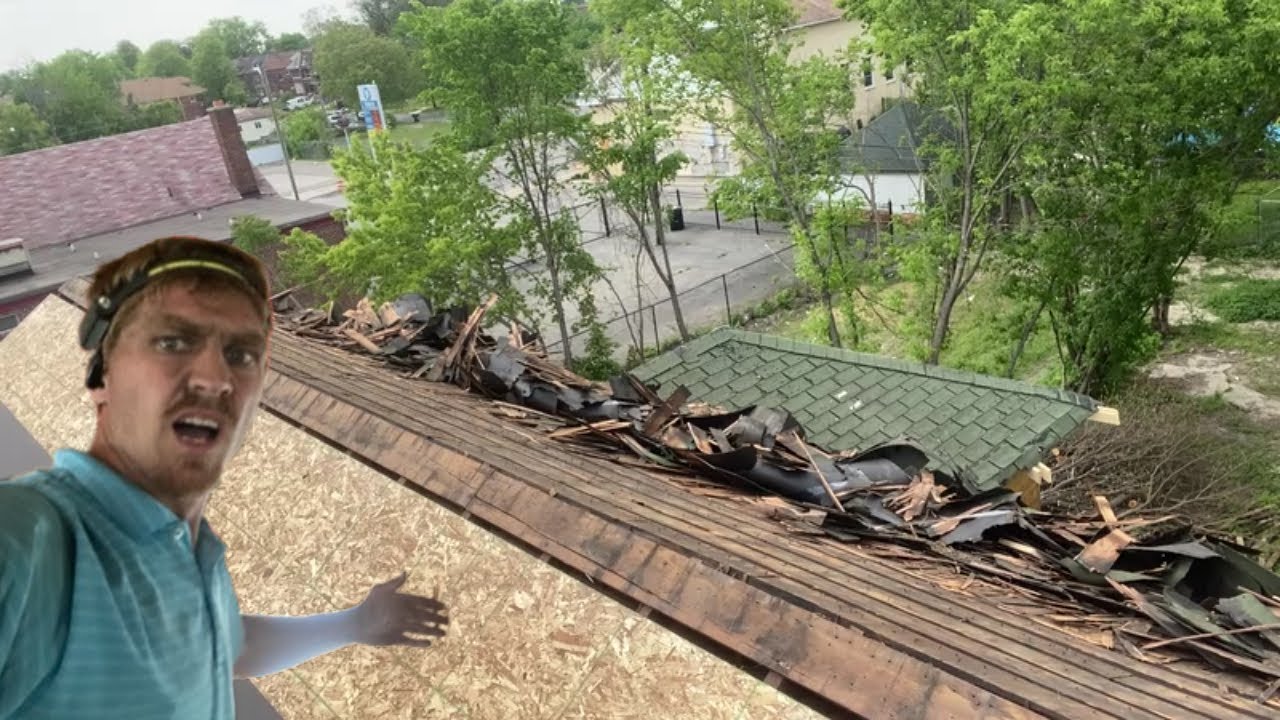
Even without naming every system detail, the evaluation logic stays consistent. If damage is concentrated only at one flashing or one penetrations’ sealing area, a repair can be targeted. If the roof has failures at many penetrations, multiple flashings, and several seam areas, then you are no longer fixing one component. You are trying to patch a whole ecosystem.
This is where professional judgment matters. One contractor might propose an emergency roof repair to stop active water intrusion immediately, and another might recommend replacement sooner based on the larger condition. Both approaches can be valid depending on the roof’s overall health and the pattern of failures revealed during inspection.
Emergency roof repair can buy time, but it should not blur the long-term decision
Sometimes you need emergency roof repair first. A leak that threatens interior materials, electrical systems, or ongoing operations can require quick action. Many contractors handle emergency storm-damage work, and the initial goal is to control water safely until a full assessment can be done.
But emergency repairs should not become the entire strategy. Once the urgency is addressed, you still need the “repairability factors” conversation. Was the leak caused by a single isolated failure, or was it triggered because the roof was already compromised and finally opened a path for water?
A good emergency response plan is not just about stopping the leak today. It is about collecting evidence. The contractor should be able to explain what was found, what looks stable, what looks marginal, and what the likely failure pattern suggests.
How contractors evaluate repairability on flat roofs
A roof inspection is where decisions stop being theoretical. Manufacturers and industry guidance both emphasize that repair or replacement should be determined based on an evaluation by professionals.
In practical terms, inspection often looks at:
- How many areas show signs of damage
- Whether repairs have already been made in multiple places
- Whether the membrane, flashing, and roof edge details appear consistently deteriorated
- Whether the damage is isolated or part of a broader pattern
- Whether the roof shows signs that it can no longer perform the way it needs to during storms and everyday weather exposure
For low-slope systems in particular, IBHS guidance addressing repair versus replacement evaluation includes materials such as low-slope metal and spray polyurethane foam. That matters for your decision because it reinforces the same theme: fire, hail, wind, and structural distortion can change whether repair is feasible. Even if your flat roof is not the one that got hit hardest in a storm, post-event evaluation helps determine whether the damage is limited or system-level.
When replacement is usually the safer call
If you want a simple decision framework, think in terms of pattern and prognosis. Here are situations where roof replacement tends to be the safer call, especially for flat roof systems that have multiple layers and detail-heavy transitions.
- Widespread damage across multiple roof areas rather than a single localized failure
- Recurring leaks that continue after prior roof leak repair
- Multiple trouble spots that require repeated patching
- An older roof where the condition suggests the system is nearing end-of-life
- Evidence of major post-storm distortion or damage that makes targeted repair unreliable
This is not saying repair is impossible. It is saying that when multiple factors point to system-level risk, replacement is usually the more defensible path.
When repair is often enough
Repair remains a strong option when the system still has integrity and the problem is truly isolated. A small, isolated problem can often be repaired, and that rule of thumb shows up repeatedly in roofing guidance.
On a flat roof, the “isolated” part is the key. An inspection should be able to connect the leak or damage to a single failure point and confirm that surrounding areas and related components do not show a similar degradation pattern.
A repair also tends to make sense when the property owner is trying to control short-term risk, especially while planning budgets or scheduling downtime. If the roof is otherwise in good shape and the contractor can confidently address the specific failure, targeted work can be a pragmatic move.
There’s also a difference between “repairing the symptom” and “repairing the cause.” Flat roofs often tempt owners into the former. When you do it right, you find the cause and fix that detail, not just the visible staining indoors.
What a flat roof replacement typically includes
Even though the exact assembly changes by system type, many roof replacement projects share a common structure: removing the existing layers, preparing the deck and substrate appropriately, installing new system components, and reworking details that commonly fail.
A typical roof replacement includes removing old roofing materials, installing new underlayment and roofing materials, replacing flashings and ridge caps, and cleaning up the site. Ridge caps are more common on pitched systems, but the underlying principle is consistent: details and terminations are part of what you are replacing, not just the top layer.
When you are evaluating quotes, ask contractors what they plan to replace beyond the visible membrane. If the scope is unclear, you can end up with a “replacement” that looks good on day one but leaves weak points in place.
One way to keep the conversation grounded is to ensure the contractor’s work plan addresses the whole system. For example:
- Removal of existing roofing materials
- Installation of new underlayment and roofing materials
- Replacement of key flashing and termination details
- Verification of drainage and water pathways
- Cleanup and site restoration
Material choice affects the repairability conversation, not just the headline price
Flat roof systems come in many types, and the system you have influences how contractors evaluate repairs versus replacement feasibility. Common commercial flat roof categories include TPO roofing installation, EPDM commercial roofing, modified bitumen roofing, and PVC roofing. There are also commercial metal roofing options in low-slope contexts.
The trade-off is that different systems tolerate different kinds of movement, and they age differently. That affects what a contractor can confidently repair. A seam or flashing that can be reliably reworked on one system may be a poor target on another system if the surrounding material is already compromised.
This is why keyworded labels like TPO roofing installation and EPDM commercial roofing are not just “material names.” They are decision variables in the inspection. The same leak story can have different repairability outcomes depending on the roof type.
If you are dealing with a rubber roofing EPDM roof, a contractor will typically treat it as a full system with transitions. If you have modified bitumen roofing, they will focus on the condition of the sheet layers and terminations. If you have PVC roofing, they will focus on how the membrane and detail interfaces have held up. I am staying general here because exact evaluation methods depend on the manufacturer system and installation conditions.
The cost factor: replacement cost is not just materials
Roof replacement cost is often discussed as a number, but it is really a stack of trade-offs: labor, materials, how much of the existing system must come off, how many details need rebuilding, and how much time and disruption the project requires.
For context on pricing, GAF reported an average 2023 roof replacement cost of $14,959 for an asphalt shingle roof, while actual costs vary by roof size, materials, and project complexity. That figure is for asphalt shingles, but it helps illustrate the budgeting reality: complexity drives cost, not just the “new roof” headline.
Flat roofs can be deceptively complex because the “complications” are often where the roof meets the world: drains, parapet edges, curbs, walls, and other penetrations. The more of those details that have failed, the more replacement begins to look like the only honest option.
If you are comparing roof repair versus roof replacement, it can help to think in terms of how many times you are likely to pay commercial roof system installation for mobilization, inspection, and partial rework. A series of roof repair jobs can be cheaper each time, but replacement can become the better value when the roof is consistently underperforming.
A practical way property owners can pressure-test the recommendation
When you get a repair recommendation, I suggest asking questions that force the contractor to show how they see the roof. When you get a replacement recommendation, the same approach helps you ensure the scope matches the actual condition.
You are looking for clarity on three points: what was found, what is likely to fail next, and why targeted work can or cannot address the root issues.
Here is the kind of evidence that matters in conversation:
- Can the contractor point to the specific failure point connected to the leak, not just nearby damage?
- Do they show whether the roof has multiple unrelated trouble spots?
- Do they explain whether the damage looks isolated or system-level?
- If it was storm-related, do they discuss whether the damage suggests repair is feasible after post-event evaluation?
- Do they tie the recommendation to roof age and condition, rather than simply “preference”?
A credible contractor can usually explain their reasoning in plain language. They should not rely on vague reassurance.
Judgment calls that do not feel fair, but are real
Sometimes the best recommendation for a flat roof is not what the owner expects. I have seen situations where a leak looks small, and the owner expects a short roof repair. Yet the inspection reveals that multiple penetrations and multiple areas show compromised conditions, and the “small” leak is only the first noticeable symptom.
Other times, the opposite happens. A flat roof can have visible wear, seams that look questionable, and aged coatings, but the underlayment and drainage pathways are holding up. In those cases, a well-planned repair and maintenance approach can outperform replacement for a while.
The common thread is that repairability decisions are judgment-based, not checkbox-based. That is why professional roof inspection matters, and why manufacturers and guidance consistently steer owners toward contractor evaluation for the repair versus replacement call.
Flat roof replacements sometimes prevent escalation, including fire damage situations
Fire damage roof replacement is a category people do not think about until they have to. IBHS guidance notes that hazards like fire can change whether repair is feasible, and post-event evaluation can identify cases where repair is preferable to full replacement.
Even when you are not dealing with fire, the same principle holds: after an event, the question becomes whether the roof assembly has structural or functional distortion that makes localized work unreliable. For flat roofs, where layers and details matter, that evaluation can become decisive.
If an event damaged more than the obvious surface, replacement can be the only way to reset the system to a known baseline.
What this means for owners planning the next season
Flat roofs often show their weaknesses in wet months. Repairs get scheduled, then storms arrive, then the leak comes back, and suddenly the project jumps from “maybe later” to “we need this addressed.” Emergency roof repair can handle the immediate leak, but the longer-term choice still comes due.
A repair plan that buys time can be legitimate if the contractor can document the isolated cause and confirm the rest of the system looks stable. Replacement is more appropriate when the inspection suggests widespread damage, recurring leaks, multiple trouble spots, or end-of-life condition.
If you are comparing residential roof installation and repair mindsets to commercial roof installation and commercial roof repair, the principle is the same but the stakes can be higher in commercial settings because downtime and interior impacts affect operations. On commercial metal roofing or low-slope membrane systems, the building owner often needs a decision that reduces uncertainty.
Keep the focus on the roof system, not just the roof surface
The biggest mistake I see is treating a flat roof like a single layer. Flat systems are assemblies, and repairability depends on the whole stack. The visible membrane is only the top layer of the story.
When you are considering flat roof replacement, the most defensible decisions come from a professional roof inspection that evaluates whether the damage is isolated or widespread, whether leaks are recurring after prior roof leak repair, and whether post-event conditions make targeted repairs unreliable. From there, the contractor can explain what replacement includes, including removal of old roofing materials, installation of new underlayment and roofing materials, and replacement of key flashings and details.
That approach is not about selling replacement. It is about matching the solution to the real condition of the roof you have, so you are not paying for the same failure more than once.
If you want, tell me what kind of flat roof you have (TPO, EPDM, modified bitumen, PVC, metal, or spray foam), how old it is, and whether the issue is a single leak or multiple trouble spots. I can help you translate your inspection findings into the most likely repair versus replacement factors to focus on.